
RTP is one of the first numbers players see in slot reviews, but it is also one of the easiest numbers to misread. A 96% RTP does not mean that every $100 session returns $96. It does not mean the next bonus is due. It does not mean a higher-RTP slot will feel smoother over a short test.
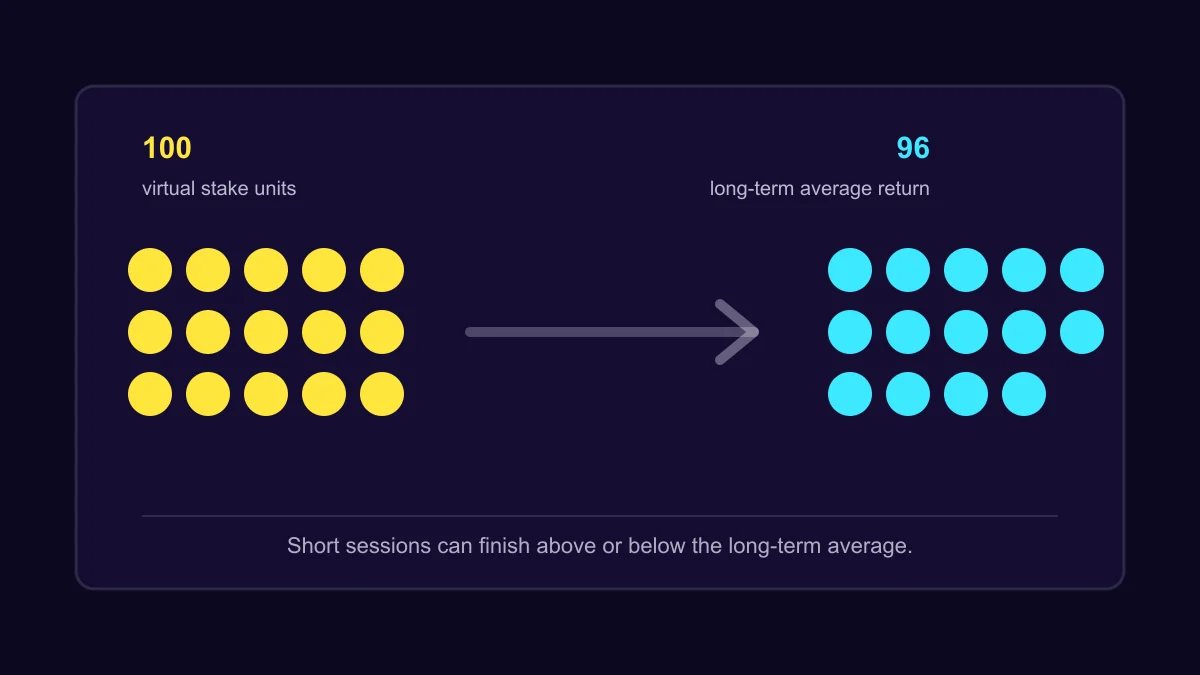
RTP stands for Return to Player. It describes the average percentage a slot is designed to return to players over a very large number of wagers. A 96% RTP means that, across long-term mathematical play, the game is expected to return about 96 units for every 100 units wagered. The remaining percentage is the house edge. See What Is House Edge in Slots? for the full explanation.
RTP Does Not Predict Your Next Spin
RTP is a long-term average, not a short-session promise. You can test a slot for 50 spins and finish above 100% return. You can also test 200 spins and never reach the main bonus. Both outcomes can happen in the same RTP model because short-term results are shaped by variance.
Use RTP as background information, not as a guarantee. When you test demos on SlotLab, pair the RTP figure with volatility, bonus frequency, feature design, paytable clarity, and how the game actually feels after repeated spins.
Is Higher RTP Always Better?
All else equal, a higher RTP is mathematically better for the player. In practice, all else is rarely equal. A 96.8% RTP slot with high volatility may feel quiet for long stretches and then concentrate value in rare feature rounds. A 96.1% RTP slot with lower volatility may produce smaller wins more often and feel more stable.
When comparing slots, look at three things together:
- The RTP shown in the game information or paytable
- The volatility profile, if the provider gives one
- How the bonus system distributes wins: frequent small events or rarer high-impact events
For example, players who want to learn Mahjong-style ways wins might start with Mahjong Ways or Mahjong Ways 2. Players curious about tumble mechanics and large multipliers might compare those with Gates of Olympus.
RTP in Demo Mode and Real-Money Versions
Demo mode is useful because it lets you inspect the screen, paytable, bonus flow, and pacing without risking real money. Still, always check the RTP inside the version you are actually playing. Some providers and markets can offer multiple RTP configurations, especially outside SlotLab on real-money operator sites.
SlotLab does not take deposits, pay out winnings, or control which version another site uses. Treat this guide as an educational explanation, not financial advice and not a promise of future results.
How to Use RTP During Demo Testing
Start with a small virtual stake and open the information menu before spinning quickly. A usable slot demo should make it easy to find the paytable, symbol rules, free spin conditions, special features, and any listed RTP.
Then test with structure. Run a fixed number of virtual spins, avoid changing stake size emotionally, and note how regular wins and feature rounds behave. This does not prove the RTP, but it does show whether the slot’s rhythm fits your tolerance for quiet stretches, small hits, and bonus concentration.
Bottom Line
RTP matters, but it should not be read alone. A high-RTP slot can still be volatile, and two slots with similar RTP can feel completely different. The better approach is to read RTP, inspect the paytable, test the demo, and compare volatility before making any real-money decision elsewhere.