
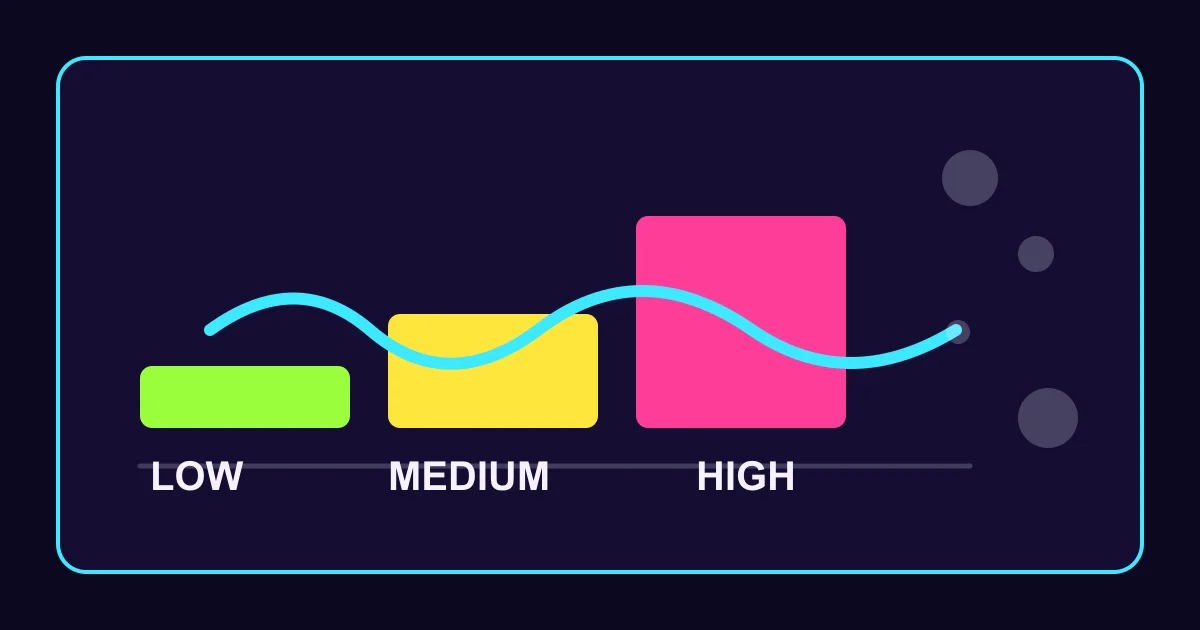
Volatility describes how a slot distributes wins. Some slots pay small amounts frequently. Others stay quiet for longer and concentrate more value in bonus rounds or rare feature states. Two games can have similar RTP but feel completely different because their volatility profiles are different.
If RTP is the long-term average, volatility is the shape of the journey toward that average. The remainder from 100% RTP is the house edge — see What Is House Edge in Slots? alongside What Is RTP? for both sides of the same math. Understanding volatility helps you choose demos that match your patience, risk tolerance, and preferred rhythm.
Low Volatility
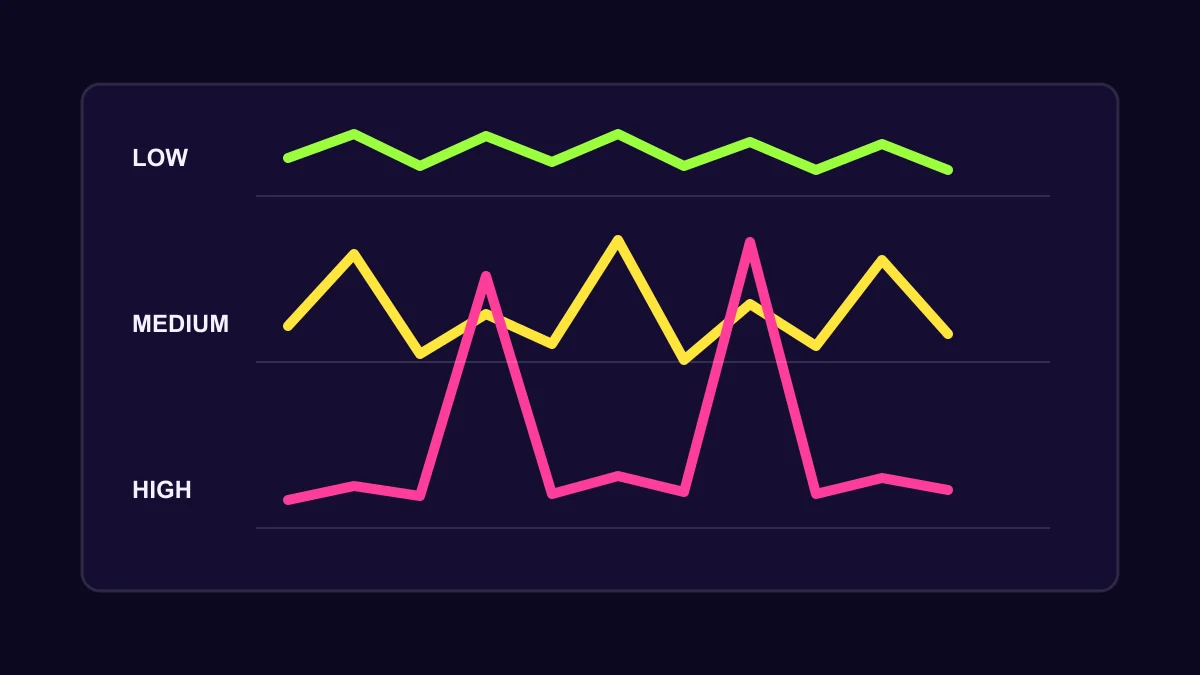
Low-volatility slots tend to produce smaller wins more often. They are useful when you want to learn the controls, paytable, symbols, and bonus rules without long empty stretches. They may feel steadier, but they usually do not emphasize huge top-end outcomes as much as high-volatility games.
In demo mode, low volatility is helpful for checking readability, mobile usability, and whether the basic spin rhythm feels clear.
Medium Volatility
Medium-volatility slots sit between steady and swingy. They often combine regular base-game wins with feature rounds that still matter. Many popular slots land in this middle zone because they offer a mix of activity and excitement without pushing too far in either direction.
If you are new to slot demos, medium-volatility games are a useful baseline. Test a few games with ways wins, free spins, or simple multipliers before moving to more aggressive designs.
High Volatility
High-volatility slots can stay quiet for longer, with more value concentrated in free spins, multipliers, bonus buys, or special feature rounds. These games often look exciting in highlight clips, but the everyday experience may require more patience.
In demo mode, test high-volatility games inside a fixed structure. Decide how many virtual spins you will run before you start. If the demo makes you feel pressured to raise the stake or chase a feature, that is important information before real money is involved anywhere else.
Volatility Is Not a Fairness Rating
Players sometimes test a high-volatility game, miss the bonus, and assume something is wrong. In many cases, that quiet stretch is simply part of the volatility model. Games with larger potential rewards usually need more empty or low-return stretches to maintain their long-term average.
That said, clarity matters. If a slot has no usable paytable, unclear feature rules, or missing game information, be cautious. The issue is not volatility itself; it is lack of transparency.
How to Test Volatility on SlotLab
Choose two or three games with different rhythms. For example, compare Fortune Tiger for a fast simple structure, Sweet Bonanza for tumble wins and multipliers, and Big Bass Bonanza for a collection-style free spin feature.
Use the same virtual stake and a similar number of spins. Do not only record whether you finished up or down. Note how long quiet stretches feel, how often features appear, how much the feature changes the balance, and whether the game encourages rushed decisions.
Bottom Line
Volatility explains a slot’s behaviour better than RTP alone. Low-volatility games are steadier, medium-volatility games are useful comparison points, and high-volatility games demand more patience. Demo mode is the right place to learn that before making any real-money decision elsewhere.