
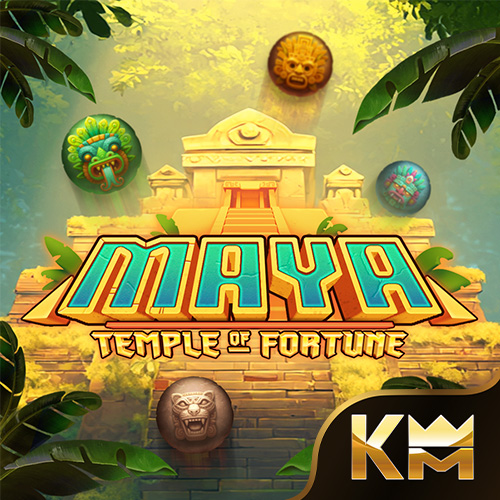

MAYA: TEMPLE OF FORTUNE

About this game
MAYA: TEMPLE OF FORTUNE Demo Overview
MAYA: TEMPLE OF FORTUNE breaks away from typical KINGMIDAS slot layouts. Instead of a 3x3 or 5x3 grid, it uses a 1x1 board — one symbol position per round. Wins build through guaranteed win chains that continue according to the game rules once a chain starts. Multipliers can climb up to x20, and a special feature activates after 10–12 consecutive wins in a chain. Maya temple imagery wraps a minimal interface that is easy to read but mechanically unusual.
On SlotLab you can test with virtual credits only. No account and no deposit are required. The demo is for learning how a single-cell slot behaves, how chains and multipliers stack, and whether medium volatility fits you before real-money play elsewhere.
Quick Facts
- Studio: KINGMIDAS
- Grid: 1x1 (single position)
- Core mechanic: guaranteed win chains
- Multipliers: up to x20
- Special feature: 10–12 consecutive wins trigger
- RTP (local data): 96.95%
- Volatility: medium
- Max win: 2,400x
- SlotLab account: not required
- SlotLab deposit: not required
RTP 96.95% is a solid comparison figure for long-run theory. The 2,400x max win is a listed ceiling, not a practical session target.
How Win Chains and Multipliers Work
Each round shows one result in the single cell. When chain conditions are met, the game enters a guaranteed win-chain sequence — wins continue under the published rules rather than ending after one spin. Multipliers can build during the chain up to x20. The special feature fires after 10–12 consecutive wins within that chain logic.
In demo mode, watch whether the chain counter and current multiplier are easy to read, and whether you can explain each payout without guessing. A 1x1 game removes payline confusion but adds chain-timing questions you will not see on a standard reel set.
Compare with AZTEC FORTUNE — another ancient-civilisation KINGMIDAS theme on a conventional grid — to decide whether you prefer minimal chain mechanics or traditional reels.
RTP, Volatility, and Max Win
Use RTP 96.95% to compare titles, not to forecast the next few minutes. Medium volatility on a chain-based game can feel quiet between chain starts, then active once a sequence begins. Treat 2,400x as a ceiling for comparison.
Do not raise virtual stakes because a chain is near ten wins and you expect the special feature. Near-miss thinking does not change the next round’s odds.
Demo Testing Checklist
Phase one: read the paytable for chain rules, multiplier behaviour, and the 10–12 win feature. Phase two: run 100–150 spins at a steady virtual bet — chain games benefit from a longer sample. Note how often chains start, how long they run, and the highest multiplier you observe. Phase three: compare with AZTEC FORTUNE or GOLD RUSH BONANZA to see whether you prefer this 1x1 model or standard slots.
Mobile and Responsible Play
A 1x1 layout is naturally mobile-friendly because there is only one symbol to track. Still verify that chain counters and multiplier displays remain readable. Set a time limit before you start and stop when it expires.
Long chains can create momentum to keep playing — that is useful information in demo mode. Before real-money play elsewhere, set spend limits, session length, and a stopping rule in advance.
Verdict
MAYA: TEMPLE OF FORTUNE is worth testing if you want an unusual KINGMIDAS experience: a 1x1 Maya temple slot with guaranteed win chains, x20 multipliers, a 10–12 consecutive-win feature, RTP 96.95%, medium volatility, and a 2,400x listed max win. Open the free demo, read the paytable, test with patience, and judge the game by clarity rather than one lucky chain.